
The itinerary
Where we go in the Gulf of Cagliari
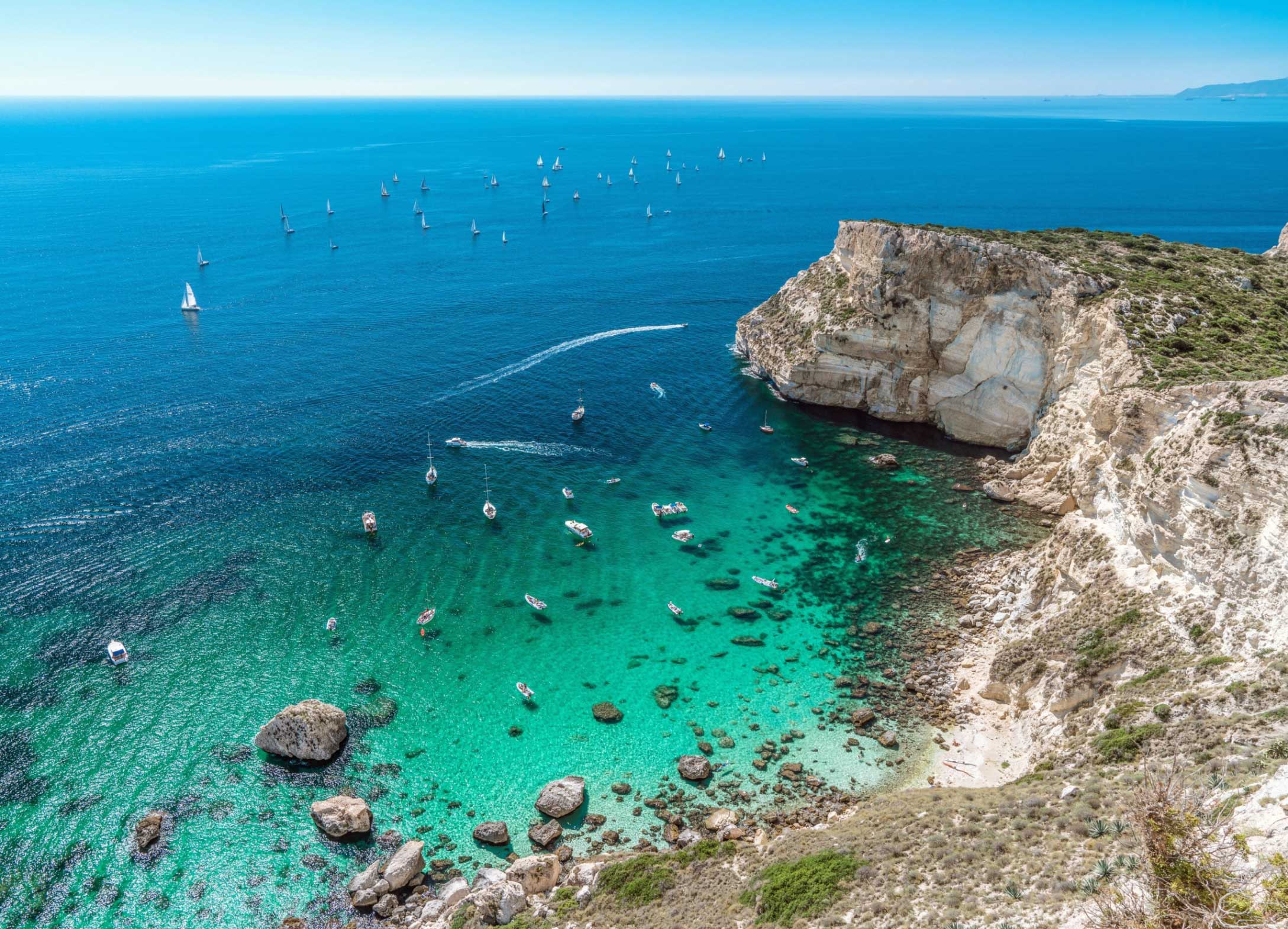
Seven places you may already know from land, but which tell an entirely different story from the water. Here they are tour by tour, in the order you meet them.
Mornings only
Mari Pintau
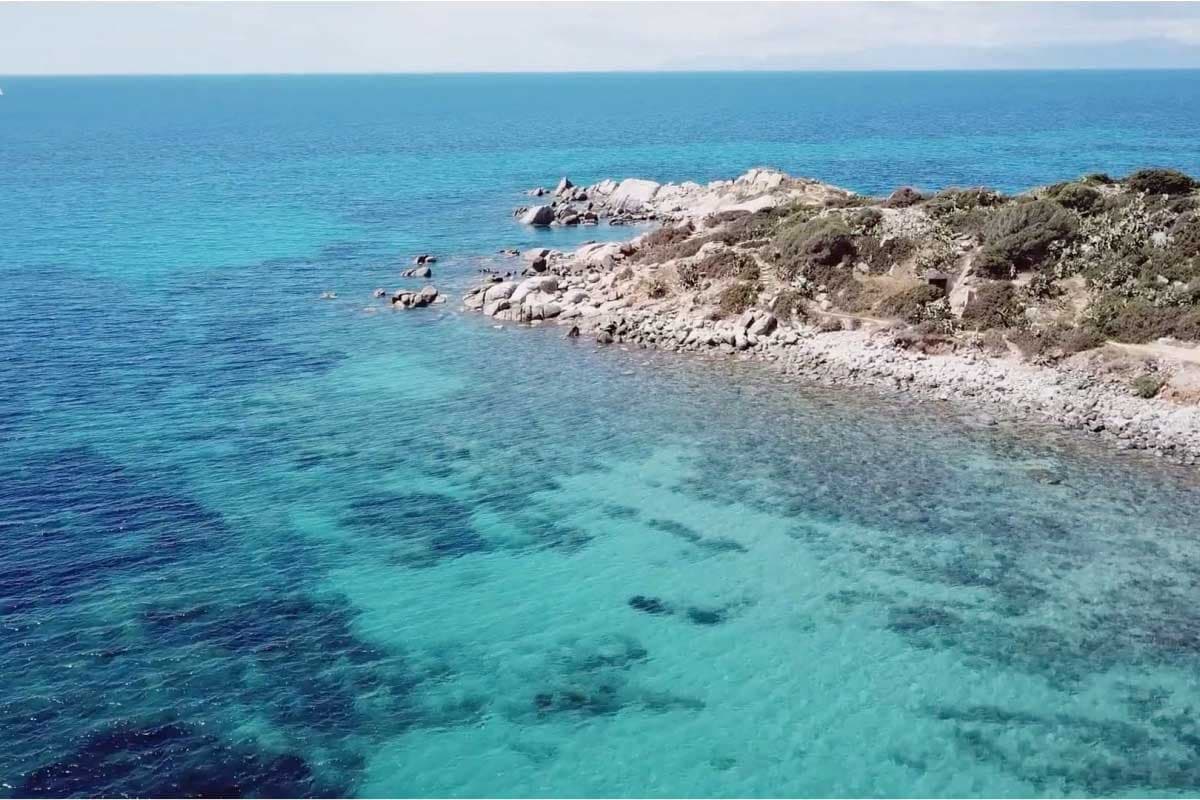
Is Mortorius
Pale granite cliffs and a shallow seabed, the furthest point of the morning trip.
Three hundred metres of inlet between the rocks, golden sand mixed with pebbles, and water that turns green near the shore. Offshore lies the wreck of the Romagna, a cargo ship sunk during the war: that is what brings divers here.
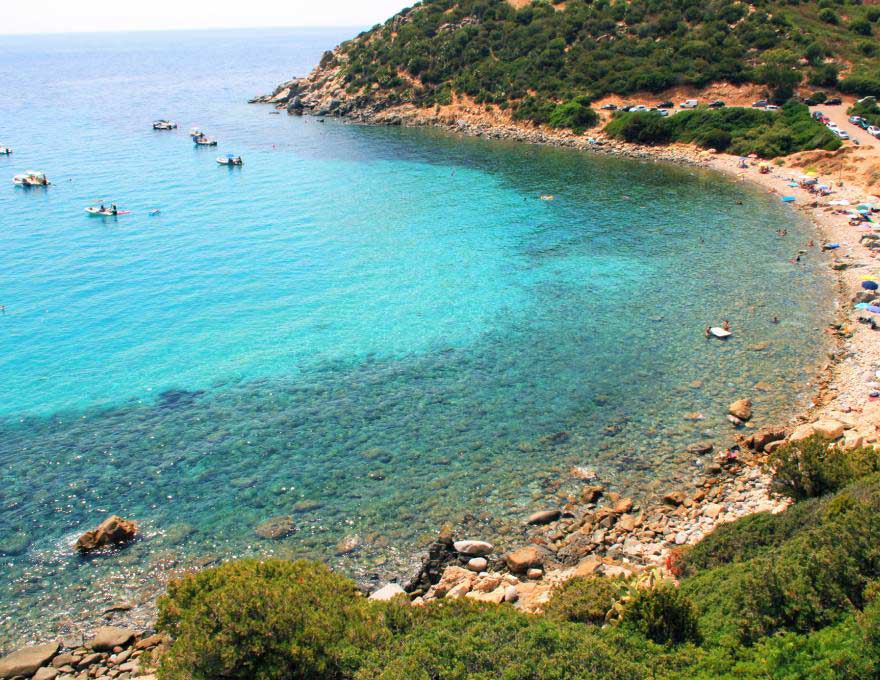
Cala Regina
Pale pebbles and a Spanish tower on the headland, at Terra Mala, on the eastern side of the gulf.
A hundred and fifty metres of rounded shingle and half-submerged rocks, sheltered from the mistral, with water that runs from turquoise to emerald. Above the cove stands the seventeenth-century watchtower it is named after.
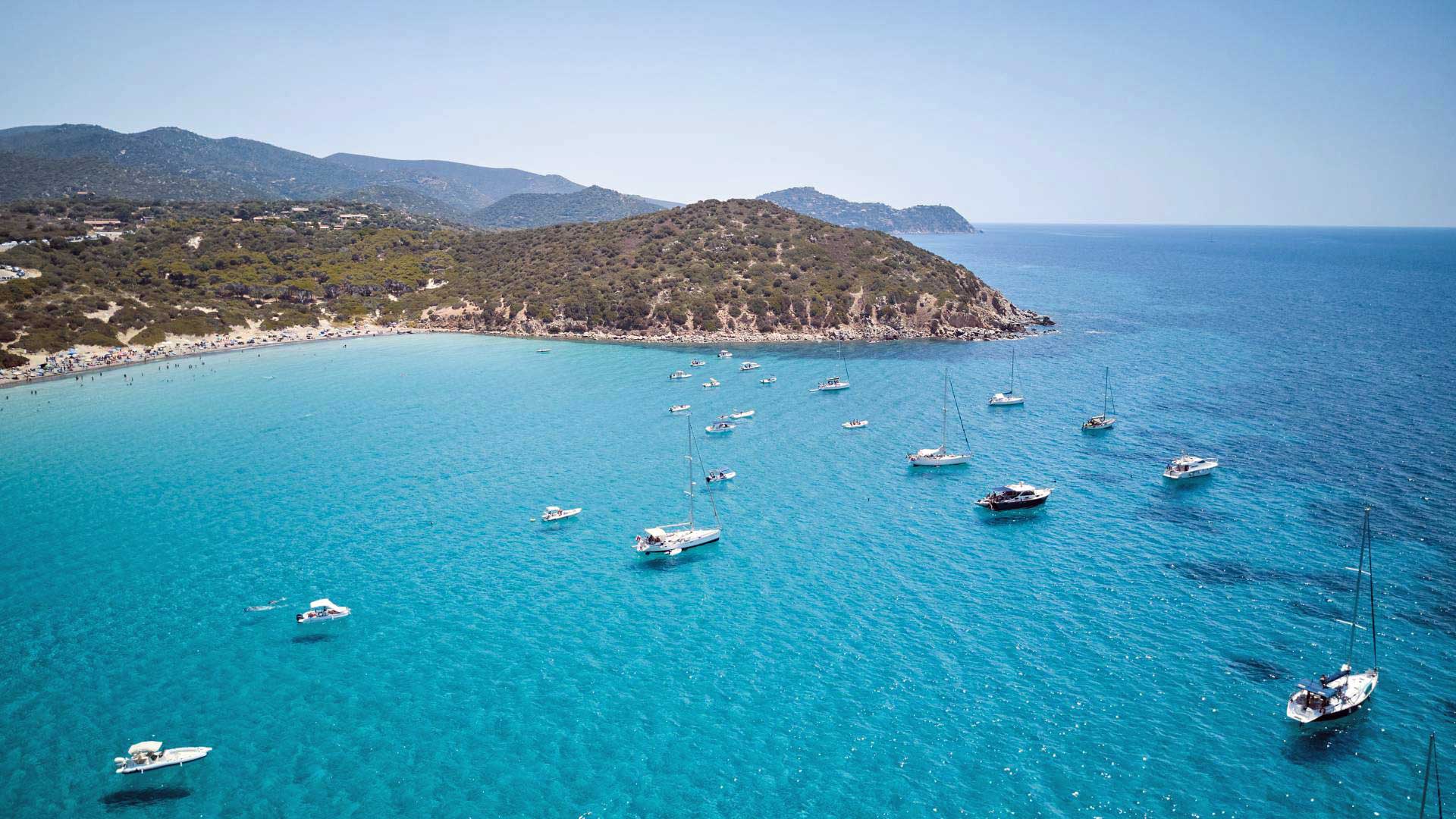
Mari Pintau
The best known of the eastern coves, beyond Capitana: pale pebbles and the water that gives it its name, «painted sea».
Past Poetto the coast changes character: the houses thin out, the rock comes back down to the water and the coves of the Villasimius road open one after another. Mari Pintau is the best known of them.
Pale pebbles instead of sand, a seabed that stays legible all the way down, and the blue-green that does its name justice. It is reached only on the morning trip, because there needs to be time to go and come back unhurried.
Morning or afternoon
Sella del Diavolo
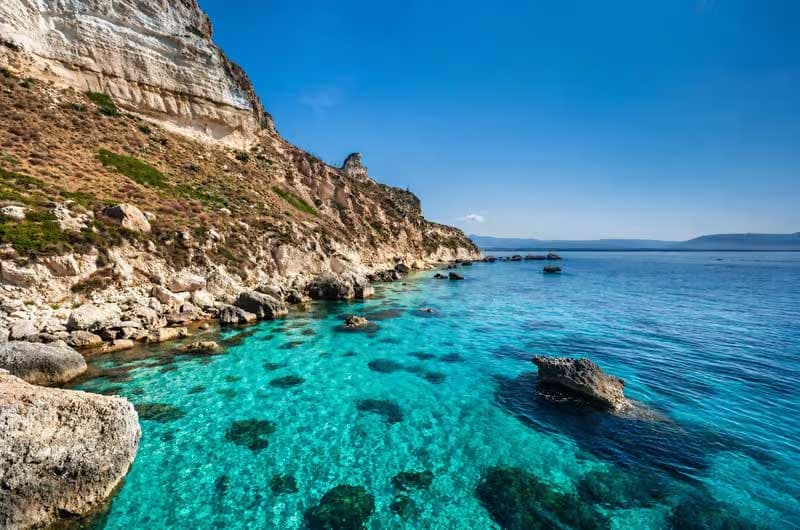
Sella del Diavolo
The headland that closes the gulf, seen from below. Sheer cliffs, sea caves and a Spanish watchtower on top.
The Sella del Diavolo — the Devil's Saddle — is visible from all over Cagliari, but from the sea it is another thing entirely: the limestone walls fall straight into the water for dozens of metres, and where the caves open the colour shifts from turquoise to deep blue.
The name comes from a legend: the archangel Michael is said to have defeated the devil here, who in falling left the saddle of his horse pressed into the rock. The Spanish watchtower still stands at the summit.
Cala Fighera
The inlet under the white cliff, just past Calamosca. These days it is seen almost only from the sea.
A hundred metres of pebbles wedged between the rocks, sheltered from the wind, with the wall of the Sella del Diavolo dropping sheer above. The path down from Calamosca has been closed since 2017 because of rockfall risk: from a boat, you simply sail in.
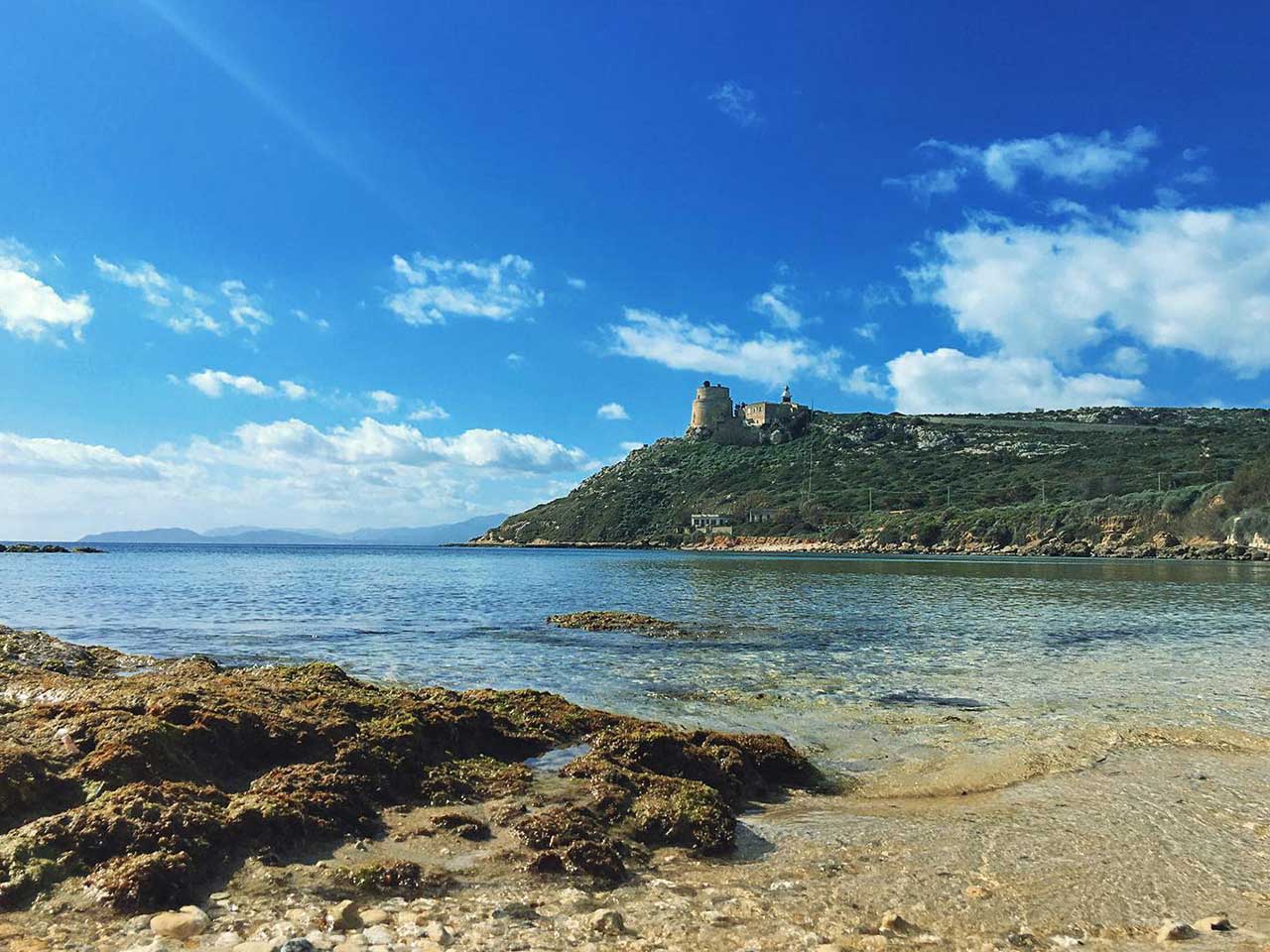
Calamosca
A sheltered bay between the cliffs, with shallow, clear water. The first stop, the one where it sinks in where you have ended up.
Calamosca opens between pale cliffs just past the harbour, hidden just enough to stay quiet even at the height of summer. The water is shallow and so clear you can see the bottom from the boat.
It is the right place for the first swim: gentle depths, no current, and the century-old lighthouse watching the bay from the top of the cliff. Bring a mask and you will find fish and posidonia meadows a few metres below the surface.
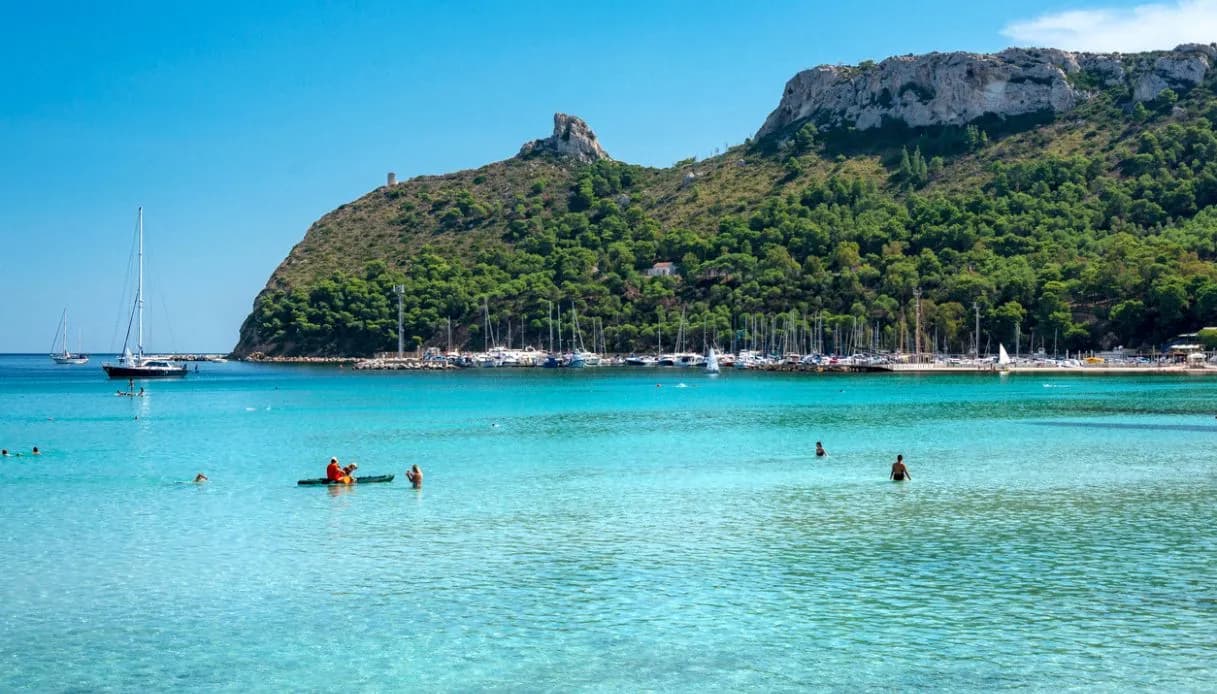
Poetto beach
Five miles of pale sand and shallow water. From the sea you take it in all at once, as from nowhere else.
Poetto is Cagliari's own beach: five miles running from the Sella del Diavolo to Quartu, with water that stays shallow for tens of metres and shifts from green to turquoise.
Seen from the water it changes completely: you take in its whole length in one go, with the Molentargius wetland behind it and flamingos that sometimes cross it in flight.
From 17:00
Sunset aperitivo
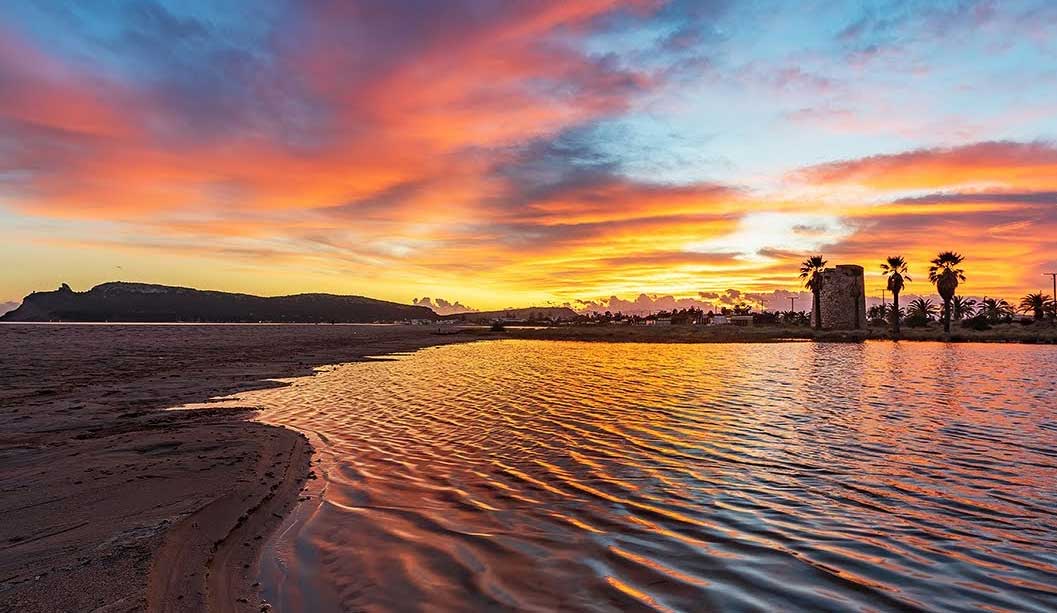
Poetto beach
Five miles of pale sand and shallow water. From the sea you take it in all at once, as from nowhere else.
Poetto is Cagliari's own beach: five miles running from the Sella del Diavolo to Quartu, with water that stays shallow for tens of metres and shifts from green to turquoise.
Seen from the water it changes completely: you take in its whole length in one go, with the Molentargius wetland behind it and flamingos that sometimes cross it in flight.
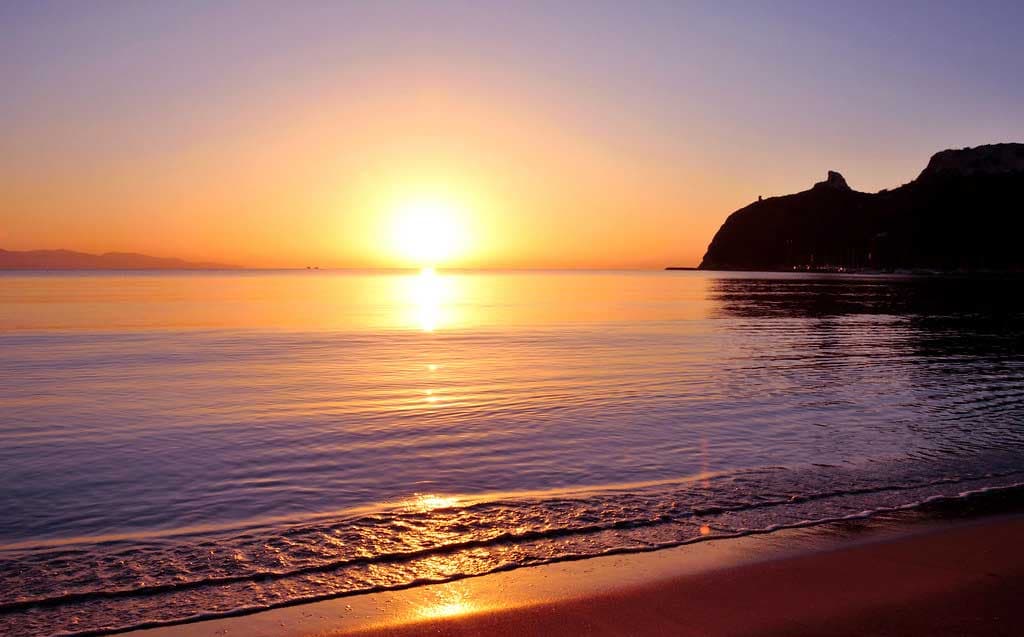
Sella del Diavolo
The headland that closes the gulf, seen from below. Sheer cliffs, sea caves and a Spanish watchtower on top.
The Sella del Diavolo — the Devil's Saddle — is visible from all over Cagliari, but from the sea it is another thing entirely: the limestone walls fall straight into the water for dozens of metres, and where the caves open the colour shifts from turquoise to deep blue.
The name comes from a legend: the archangel Michael is said to have defeated the devil here, who in falling left the saddle of his horse pressed into the rock. The Spanish watchtower still stands at the summit.
Three tours, one gulf
The morning pushes east as far as Is Mortorius; the afternoon stays under the Sella del Diavolo; the evening returns off Poetto for the sunset.
What people say
Those who have already been aboard
Five stars out of five5.0 on Google
The best boat trip I have ever taken in Italy. Friendly captains and a genuinely enjoyable tour. Fast and wild whenever you ask for it. Delicious food, and the wine is excellent too. It was a pleasure, Luca and Marcello! We'll see you again!!
An unforgettable experience. Booking was extremely easy, in Spanish too, and they answered all our questions. We had a wonderful time, children and adults alike. 10 out of 10!
A spectacular day..a warm welcome, good humour, fun and real know-how..a formidable mix for a fantastic afternoon...we'd do it again.
A fantastic boat trip in Sardinia! Wonderful bays, crystal-clear water, lovely swimming stops and an aperitivo with a refreshing Italian wine: quite simply an unforgettable experience. Special thanks to Captain Gianluca, whose warmth and professionalism made the tour perfect. Everything was organised flawlessly and the atmosphere on board was wonderful. Highly recommended: we would book the tour again without hesitation!
Professionalism, organisation and hospitality lead the way.. Highly recommended for seeing the beauty of the sea around Cagliari, safely and cheerfully.. Thank you for the fantastic day 💙
A great experience, a beautiful day at sea, hats off to skipper Luca, who gave us a carefree day, everything top notch
A wonderful day, Luca a captain through and through! Highly recommended!
A wonderful experience, very kind and skilled crew
An unforgettable boat tour and one of the highlights of our stay in Cagliari! Everything was exceptionally well organized. The organizer was welcoming, attentive, and professional, and the boat was beautiful, clean, and very comfortable. The itinerary included stops at Sella del Diavolo, Cala Fighera, Calamosca, Cala Bernat, and Poetto. We discovered breathtaking coves and coastal spots, some of which cannot be reached by land, making the experience feel truly special.